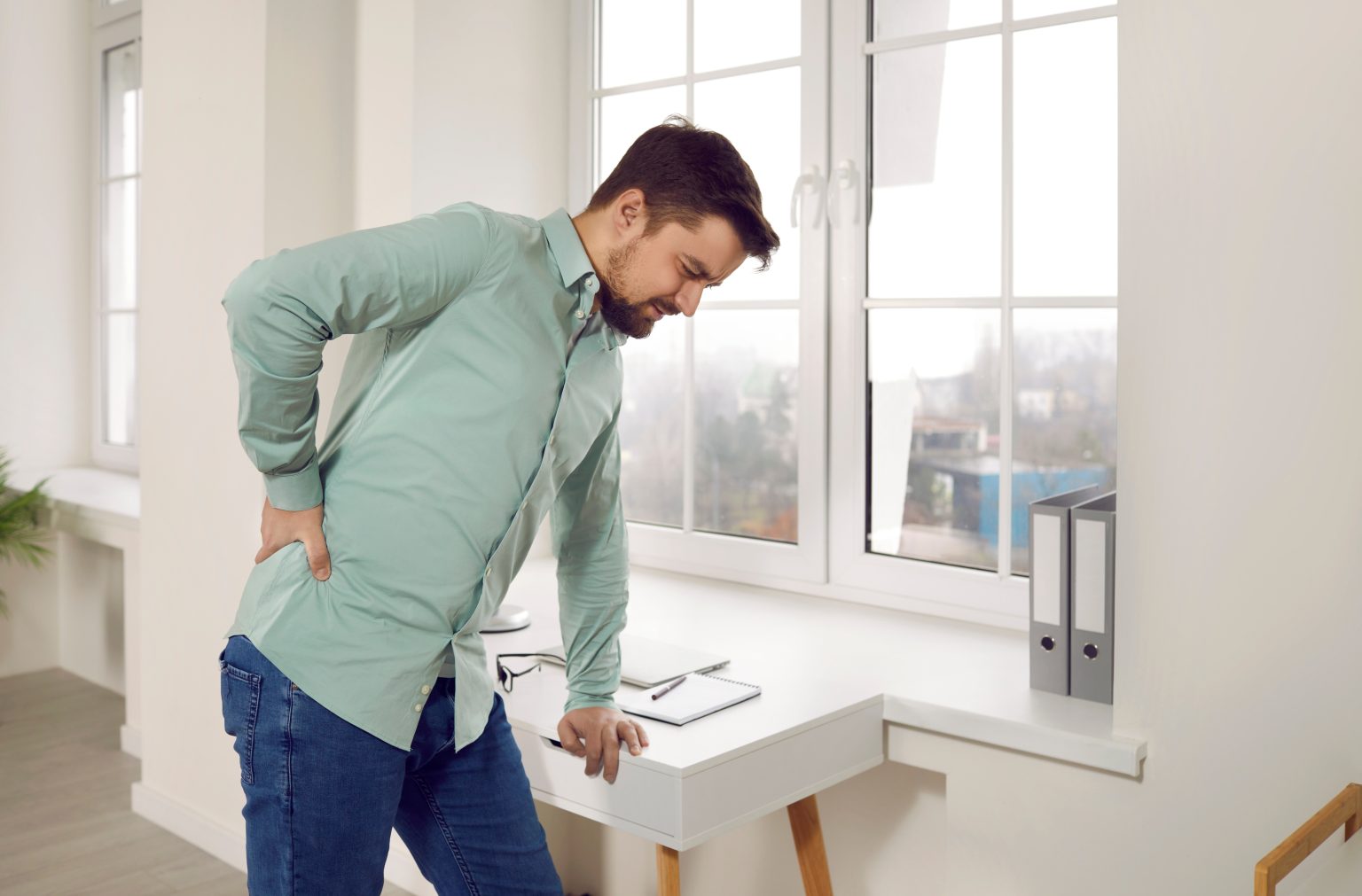
A Modern Problem Caused by Modern Lifestyles
If your back begins to ache after sitting at your desk, driving for a long time, or relaxing on the sofa, you’re certainly not alone. Many people notice that their back feels stiff, tight or painful after prolonged sitting.
For some, the discomfort begins gradually throughout the day. Others may feel a sharp ache when standing up after sitting for a long period.
Because so many jobs now involve computers and desk work, this has become one of the most common musculoskeletal complaints. In fact, clinicians frequently hear patients ask:
“Why does my back hurt when I sit for too long?”
The answer usually lies in a combination of posture, muscle fatigue and spinal mechanics.
At Falcon Health, clinicians regularly assess patients experiencing back pain related to prolonged sitting and workplace posture.
Understanding why sitting causes back pain can help you prevent it — and know when it may be time to seek professional advice.
Why Sitting Places Stress on Your Spine
Although sitting may feel like a restful position, it actually places significant pressure on the spine, particularly the lower back.
When standing, the spine is supported by muscles in the legs and core. However, when sitting for long periods, the body relies heavily on the structures of the spine itself.
Prolonged sitting, especially with poor posture, can place extra strain on the lower back and the tissues that support it.
Over time this can contribute to stiffness, discomfort and fatigue in the lower back.
Common Reasons Your Back Hurts When Sitting
Several factors may contribute to back pain while sitting.
Poor Posture
One of the most common causes is poor sitting posture.
Many people gradually adopt a slouched position while working at a desk or using a laptop. This causes the spine to round forward, placing additional strain on the lower back.
Forward head posture may also place strain on the neck and upper back.
Weak Core Muscles
The muscles around the abdomen and lower back help stabilise the spine.
When these muscles are weak, the spine receives less support while sitting, increasing pressure on joints and discs.
Tight Hip Muscles
Prolonged sitting can cause the hip flexor muscles at the front of the hips to become tight.
Tight hips can tilt the pelvis forward and increase stress on the lower back.
Spinal Joint Restrictions
Restricted movement in the joints of the spine can cause stiffness and discomfort during prolonged sitting.
These restrictions often develop due to posture habits, repetitive movements or previous injuries.
Herniated or Bulging Discs
Sitting places significant pressure on the discs between the vertebrae.
If a disc bulges or is irritated, it may affect nearby nerves. This is sometimes referred to as a herniated or bulging disc.
Disc-related problems may cause:
- Lower back pain
- Pain radiating into the legs
- Tingling or numbness
You can learn more about this in our article on “Can a Chiropractor Help with a Herniated Disc?”
Signs Your Sitting Posture May Be Causing Back Pain
You may notice several warning signs that your posture is contributing to discomfort.
These may include:
- Back pain that improves when standing or walking
- Stiffness when getting up from a chair
- A dull ache in the lower back during desk work
- Neck or shoulder tension after computer use
- Pain during long car journeys
If these symptoms occur regularly, your posture or workstation setup may be contributing to the problem.
How to Reduce Back Pain While Sitting
Making small adjustments to posture and daily habits can often make a big difference.
Maintain a Neutral Spine
Try to keep your back supported with a natural curve in the lower spine rather than slouching forward.
Using a lumbar support cushion can help maintain this position.
Adjust Your Workstation
A well-positioned workstation can reduce strain on the spine.
Key adjustments include:
- Screen at eye level
- Feet flat on the floor
- Knees slightly lower than hips
- Back supported by the chair
Take Regular Movement Breaks
One of the most important strategies is simply not sitting for too long without moving.
Try standing, stretching or walking every 30–60 minutes.
Movement helps restore circulation and reduce pressure on spinal structures.
Strengthen Core Muscles
Strengthening the muscles that support the spine can improve posture and reduce strain during sitting.
Exercises may focus on:
- Core stability
- Glute strength
- Hip mobility
These exercises may be recommended as part of Physiotherapy or rehabilitation programmes.
How Chiropractic Care May Help
If sitting-related back pain persists despite improving posture, underlying spinal issues may be involved.
Chiropractors assess how the spine, joints and muscles move together.
At Falcon Health, treatment may include:
Spinal Adjustments
Chiropractic treatment may be used to help improve movement in restricted spinal joints where clinically appropriate.
Improving mobility may help reduce stiffness associated with prolonged sitting in some people.
Soft Tissue Therapy
Muscle tension in the lower back, hips or shoulders may contribute to pain.
Soft tissue therapy helps release tight muscles and improve flexibility.
Postural Advice
Clinicians can assess posture and workstation setup to identify factors contributing to discomfort.
Small adjustments can help reduce strain on the spine.
Rehabilitation Exercises
Strengthening exercises may help support the spine and improve posture over time.
When Should You See a Chiropractor?
Occasional stiffness after sitting is common. However, persistent back pain should be assessed.
You may benefit from professional advice if:
- Back pain occurs daily when sitting
- Pain lasts longer than a week
- Pain spreads into the legs
- You experience tingling or numbness
- Back pain interferes with work or sleep
Seek urgent medical advice if you develop symptoms such as loss of bladder or bowel control, numbness around the saddle area, severe weakness, fever, unexplained weight loss or pain after a significant injury.
A professional assessment can help determine whether the symptoms may be related to posture, joint restrictions or another underlying issue.
Back Pain Assessment in Burgess Hill
At Falcon Health, clinicians evaluate posture, spinal movement and muscle balance to understand the causes of back pain.
Treatment plans may include chiropractic care, physiotherapy and rehabilitation exercises designed to improve spinal function and reduce discomfort.
You can learn more about treatment options on the clinic’s Chiropractic Treatment page.
Sit Comfortably Again
Back pain caused by sitting is increasingly common, particularly in modern working environments. Fortunately, small changes to posture and movement habits can often make a significant difference.
If sitting-related back pain is affecting your daily life, professional assessment can help identify possible contributing factors and guide appropriate treatment.
The clinicians at Falcon Health can help you understand your symptoms and discuss appropriate next steps.
Book an appointment today if you would like your symptoms assessed.